
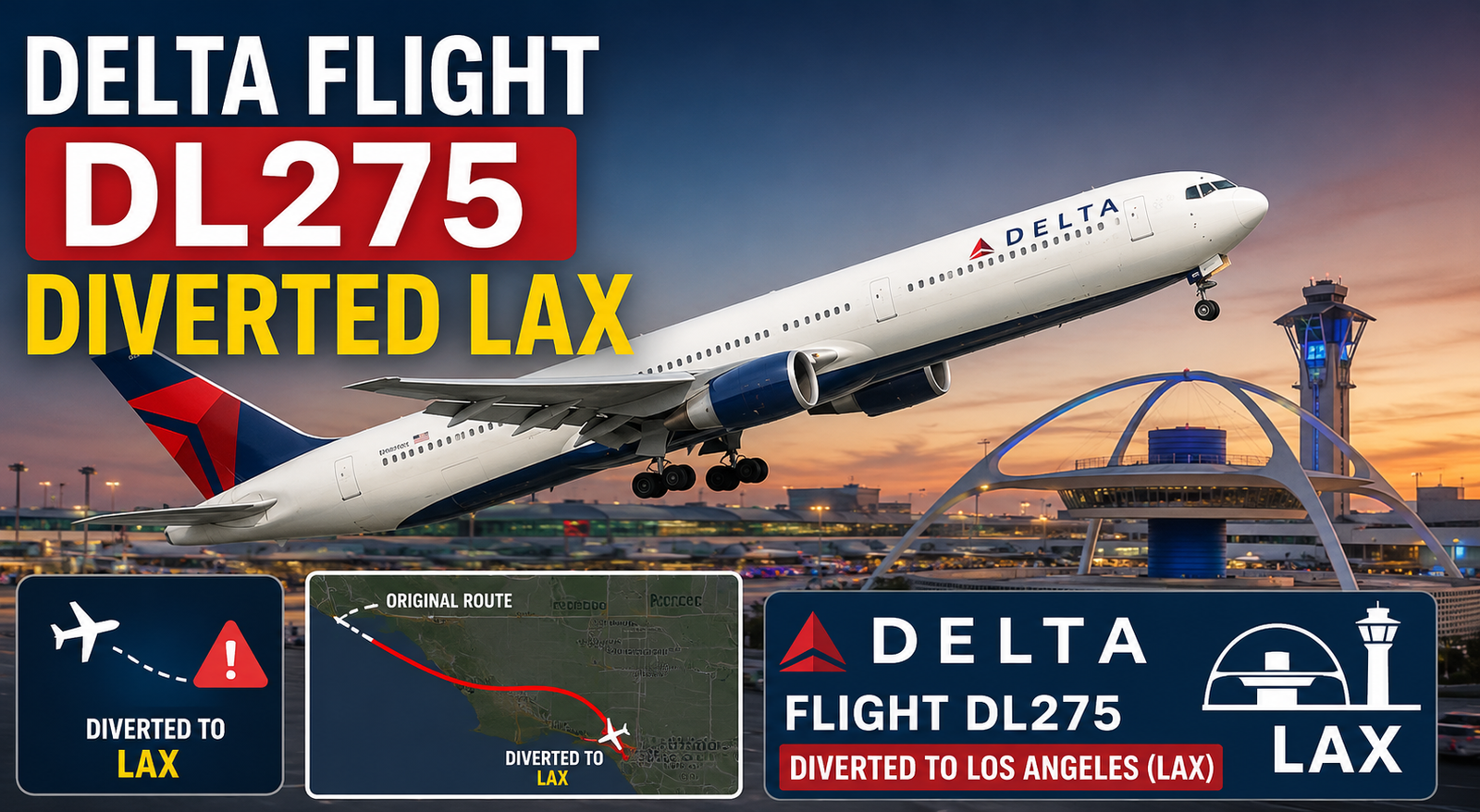
Understanding the Delta Flight DL275 Diverted LAX Incident
The phrase “Delta Flight DL275 diverted LAX” started getting attention because it involved a long-haul international flight that did not complete its original route as planned. DL275 was traveling from Detroit to Tokyo Haneda, a demanding trans-Pacific journey where aircraft systems, weather planning, fuel calculations, and diversion options all matter a great deal. When a flight like this changes course, passengers naturally want to know whether the situation was dangerous or simply precautionary.
In this case, the aircraft was reported to have diverted to Los Angeles International Airport after a technical issue connected to the engine anti-ice system. That may sound alarming to someone who does not follow aviation closely, but diversions do not automatically mean a flight is in immediate danger. In commercial aviation, a diversion is often the safest and most professional response when crews detect a system issue that could affect the rest of the journey.
The important point is that the flight landed safely at LAX. No injuries were reported, and the aircraft was handled through normal airline safety procedures. From a passenger’s point of view, the delay would have been frustrating, especially on such a long international trip. From an aviation point of view, however, the decision shows how seriously airlines treat technical warnings before they become bigger problems.
Why a Flight From Detroit to Tokyo Would Divert to LAX
At first glance, Los Angeles may seem like a strange diversion airport for a Detroit-to-Tokyo flight. Many people imagine that the aircraft should simply land at the nearest airport, especially after turning around over the northern Pacific region. But long-haul flight decisions are not based only on distance. Delta Flight DL275 Diverted LAX Pilots and airline operations teams also consider maintenance facilities, passenger handling, runway capability, weather, aircraft type, and the best place to safely continue or recover the journey.
LAX makes practical sense because it is a major international airport with strong airline infrastructure. A large wide-body aircraft such as an Airbus A350 needs suitable gates, ground equipment, maintenance support, customs capability, and passenger rebooking options. A smaller airport may be geographically closer, but it may not be the best place to inspect the aircraft or support hundreds of international travelers.
For passengers, this can feel confusing because a diversion sometimes means flying for hours away from the original destination. But in aviation, the safest landing place is not always the closest dot on the map. The crew has to think beyond the next thirty minutes. They must choose an airport where the aircraft can land safely, be checked properly, and where passengers can be supported without creating additional operational problems.
What an Engine Anti-Ice System Does

The reported issue involved the engine anti-ice system, Delta Flight DL275 Diverted LAX which is a safety system designed to help protect aircraft engines from ice buildup in certain atmospheric conditions. At high altitude, aircraft may pass through very cold areas where moisture can freeze on important surfaces. Engine anti-ice systems help reduce that risk by using heat to prevent ice from forming where it could affect engine performance.
This does not mean the engine stopped working. It also does not mean the aircraft was falling or unable to fly. The wording matters here. A technical issue with an anti-ice system is different from an engine failure. The aircraft can remain stable and controllable, but the crew must decide whether continuing over remote oceanic airspace is still the smartest choice.
On a trans-Pacific route, caution becomes even more important. There are long stretches where diversion airports are limited, weather can change, and aircraft systems need to remain fully reliable. If a system related to engine protection is not behaving as expected, landing at a major airport for inspection is the responsible move. It is better to interrupt a journey than to push ahead with reduced safety margins.
Why the Crew’s Decision Was the Right Move
Commercial pilots are trained to manage problems before they become emergencies. That is one of the biggest reasons aviation is so safe today. A warning or system fault does not always require panic, Delta Flight DL275 Diverted LAX but it does require discipline. The crew must review checklists, communicate with air traffic control, coordinate with airline operations, and choose the safest plan based on the aircraft’s condition.
In the Delta Flight DL275 diverted LAX case, the decision appears to have been precautionary. That word is important. A precautionary diversion means the crew is not waiting for a situation to get worse. They are taking action early because the remaining route, aircraft system status, and available support all point toward landing sooner rather than continuing across the ocean.
From an expert perspective, this is exactly how modern airline safety is supposed to work. Passengers may see a diversion as an inconvenience, but aviation professionals see it as risk management in action. The aircraft landed safely because the crew followed procedures, made a conservative decision, and prioritized safety over schedule.
Passenger Experience During a Long-Haul Diversion
For passengers, the most stressful part of a diversion is often not the technical issue itself. It is the uncertainty. People may wonder why the aircraft is turning, how long the delay will last, whether they will miss connections, Delta Flight DL275 Diverted LAX and whether the situation is serious. On a long-haul flight, that uncertainty can feel even heavier because travelers may already be tired, far from home, and expecting a completely different arrival plan.
A diversion to LAX would have disrupted travel plans for everyone onboard. Some passengers may have had connecting flights in Tokyo. Others may have had hotel bookings, business meetings, family visits, or onward travel within Japan or Asia. Even when the aircraft lands safely, the human side of the event continues through rebooking, waiting, customer service, and schedule recovery.
Still, inconvenience is not the same as danger. A safe landing gives the airline time to inspect the aircraft and arrange new travel options. It may not feel ideal in the moment, but it is far better than continuing a long oceanic route with a system that requires attention. For passengers, the best mindset is to treat a diversion as a safety-first interruption rather than a failure of the flight.
Why LAX Is a Strong Diversion Airport
Los Angeles International Airport is one of the busiest and most important airports in the United States. It handles large international aircraft daily and has the infrastructure needed for wide-body operations. For an Airbus A350, that matters. Not every airport can comfortably support the same level of maintenance, ground handling, and passenger services.
Another major factor is airline support. Delta Flight DL275 Diverted LAX When an airline has a strong presence at an airport, it can usually manage a diversion more effectively. That includes arranging gates, technical inspections, replacement crews if needed, hotel support, baggage handling, and rebooking options. A safe landing is only one part of the job; the airline also has to manage everything after the aircraft reaches the ground.
This is why LAX was a sensible choice for DL275. It gave the crew and airline a practical recovery point. The aircraft could be inspected, passengers could be moved through a major international airport, and the airline could work on getting travelers to Tokyo through alternative arrangements. In aviation, the best diversion airport is often the one that can solve the whole problem, not just receive the aircraft.
What This Incident Says About Modern Aviation Safety
The Delta Flight DL275 diverted LAX story is a useful reminder that modern aviation is built around layers of safety. Aircraft systems monitor performance. Pilots receive alerts. Crews follow checklists. Dispatch teams support decisions from the ground. Air traffic control helps manage routing. Maintenance teams inspect the aircraft after landing. Each layer reduces risk.
Many passengers only notice aviation safety when something unusual happens. But behind every flight is a system designed to catch small issues early. A diversion can look dramatic on a flight-tracking map, especially when the aircraft turns away from its planned route. But inside the safety system, that turn can be a calm and calculated decision.
This incident also shows the difference between a serious emergency and a controlled precaution. Both can involve a diversion, but they are not the same thing. In this case, the available reporting points to a technical concern that led to a safe and controlled landing. That is not a sign that air travel is unsafe. It is a sign that the safety process worked.
Common Misunderstandings About Flight Diversions
One common misunderstanding is that every diversion means the aircraft was in immediate danger. That is not true. Flights can divert for medical emergencies, weather, unruly passengers, airport closures, fuel planning, maintenance warnings, or technical issues. Some are urgent, while others are precautionary. Delta Flight DL275 Diverted LAX The word “diverted” simply means the flight landed somewhere other than its planned destination.
Another misunderstanding is that pilots always choose the nearest airport. In reality, they choose the most suitable airport. Suitability includes runway length, weather, terrain, emergency services, aircraft maintenance, airline operations, customs, passenger support, and the nature of the technical issue. For a wide-body international aircraft, a larger airport may be the better choice even if it requires more flying time.
A third misunderstanding is that a system fault always means a major mechanical failure. Aircraft are complex machines with many sensors and backup systems. A warning may indicate that something needs inspection, not that something has completely failed. Pilots are trained to respect these warnings because early action is one of the main reasons commercial aviation remains highly reliable.
Lessons Travelers Can Take From the DL275 Diversion
The first lesson is simple: a diversion is usually a sign of caution, not chaos. Delta Flight DL275 Diverted LAX When a crew decides to land somewhere else, they are making a safety-based decision. Passengers may feel disappointed or anxious, but the decision is made to protect everyone onboard. The safest flight is not always the one that arrives on time; it is the one that responds correctly to changing conditions.
The second lesson is that long-haul flights have more complex decision-making than short domestic flights. A technical issue over land may be easier to manage because there are many nearby airports. Over oceanic routes, the crew has to think carefully about how conditions might develop hours later. That is why a system issue that seems manageable at the moment may still justify a diversion.
The third lesson is that passengers should stay calm and listen for crew instructions. Cabin crew members are trained to manage communication, safety, and passenger needs during unexpected situations. Even if announcements are brief, that does not mean information is being hidden. Sometimes the flight deck is busy coordinating checklists and operational decisions, so updates come only when there is something useful to share.
How Airlines Handle Passengers After a Diversion
Once a diverted aircraft lands, the airline has several jobs to manage at the same time. The aircraft needs inspection. The crew’s duty time must be reviewed. Passengers need information. Bags may need to be handled. International travelers may need assistance with documentation or onward flights. Customer service teams then work to rebook people as efficiently as possible.
For a flight like DL275, the onward destination was Tokyo Haneda, so passengers likely needed international rebooking support. That can involve placing travelers on later Delta flights, partner airline flights, or different routings depending on seat availability. During busy travel periods, this process can take time because hundreds of people may need new arrangements at once.
This is where a major airport like LAX becomes valuable. Larger airports have more flights, more staff, more service desks, and more recovery options. That does not make the delay pleasant, but it gives the airline more tools to solve the problem. A diversion to a smaller airport might land safely but create a much harder recovery situation for passengers.
Why This Story Became a Search Trend
The keyword “Delta Flight DL275 diverted LAX” became searchable because it combines three things people quickly look up: a flight number, a diversion, and a major airport. When travelers see a flight turn around on a tracker, or when passengers share updates online, people want immediate answers. They search the flight number because it gives the most direct path to the incident.
Aviation stories also spread quickly because they create concern. Most people are not familiar with technical terms like engine anti-ice, so the phrase can sound more frightening than it really is. Without context, readers may assume the worst. That is why clear explanations matter. A technical diversion should be explained in plain language, not exaggerated for clicks.
The reality is more balanced. DL275 did not complete its planned route, and passengers were delayed. That is the negative side. But the aircraft landed safely, the crew acted conservatively, and the situation was handled through standard safety procedures. That is the bigger picture readers need to understand.
Final Thoughts on Delta Flight DL275 Diverted LAX
The Delta Flight DL275 diverted LAX incident was a disruption, but it also showed how aviation safety is supposed to work. A technical issue was detected, the crew assessed the risk, and the aircraft diverted to a major airport where it could be inspected properly. The passengers did not get the journey they expected, but they got the outcome that matters most: a safe landing.
For travelers, this event is a reminder that flight crews are trained to make conservative decisions. In aviation, caution is not weakness. It is professionalism. A delay can be repaired, a missed connection can be rebooked, and an aircraft can be inspected. Safety has to come first because there is no schedule more important than the people onboard.
So, when people search for “Delta Flight DL275 diverted LAX,” the key takeaway should not be fear. The better takeaway is trust in the process. The aircraft’s systems alerted the crew, the crew responded, LAX provided a suitable landing point, and the flight ended safely. That is exactly what passengers should want from a modern airline safety system.