
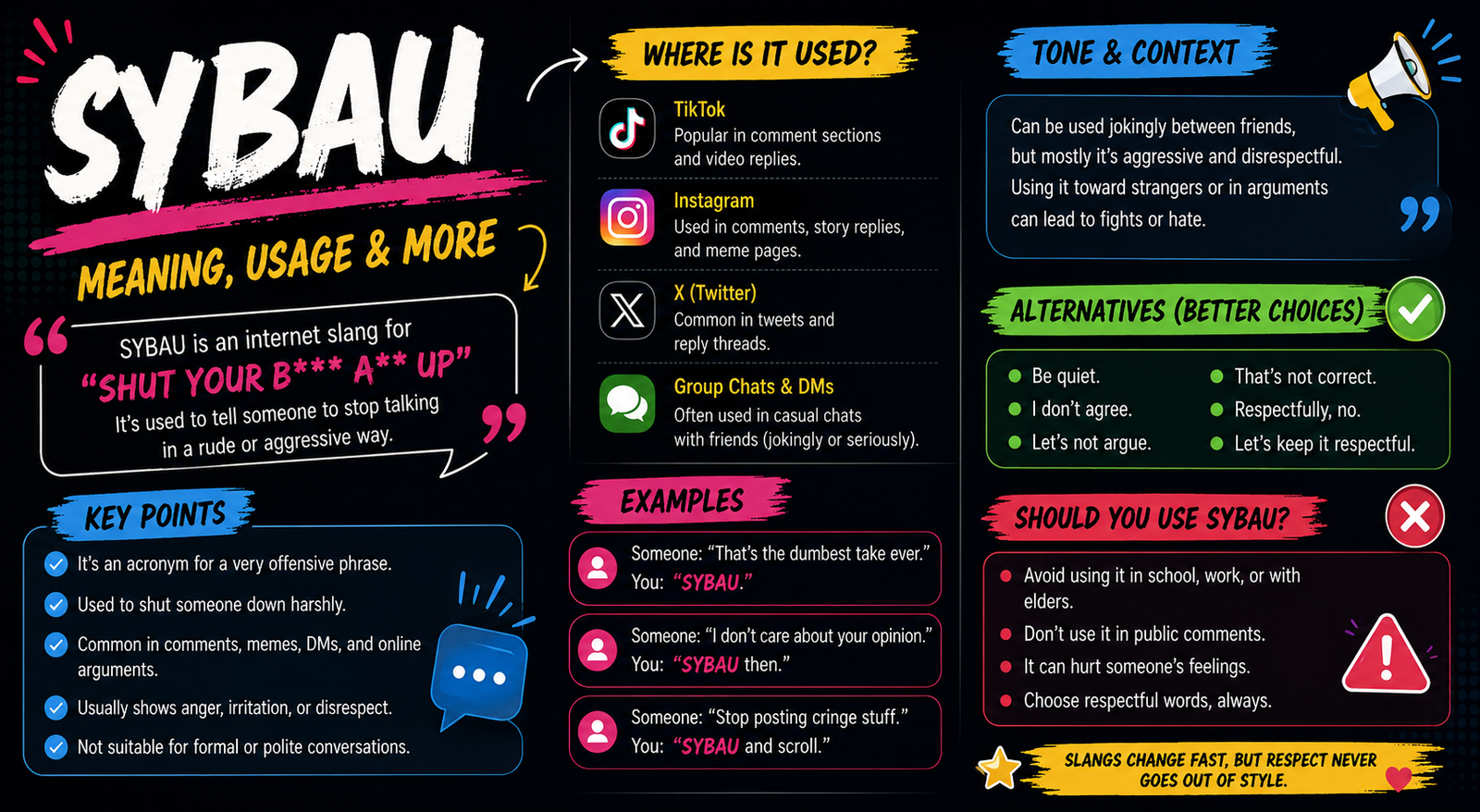
What Does SYBAU Mean?
SYBAU is an internet slang term that people often use in comments, memes, short videos, group chats, and social media replies. It is an acronym, and its real meaning is rude and aggressive. Because of that, it is not the kind of word you should use in formal writing, school work, business communication, or polite conversation. It belongs more to online arguments, sarcastic replies, and meme culture.
The reason many people search for SYBAU is because it does not look offensive at first. To someone who does not know internet slang, it may seem like a random harmless word. Some people may even guess that it means something positive, motivational, or funny. But in reality, the phrase behind it is insulting, so it is important to understand the meaning before using it anywhere.
In simple words, SYBAU is used when someone wants to tell another person to stop talking in a harsh way. It is not just a casual “be quiet.” It carries anger, disrespect, and attitude. That is why context matters a lot. If you see it in a joke between close friends, it may not be serious. But if it is used toward a stranger, teacher, parent, customer, or coworker, it can sound very disrespectful.
Why SYBAU Became Popular Online
SYBAU became popular because internet language moves very fast. Social media users love short words, acronyms, and coded phrases because they save time and create a sense of belonging. When people understand a slang term, they feel like they are part of the online crowd. When they do not understand it, they feel left behind. This is one reason terms like SYBAU spread quickly.
Another reason is that many platforms filter or limit direct offensive language. So users often create abbreviations to express rude phrases without writing the full words. This does not make the phrase polite, but it makes it easier for people to post without using the complete insulting sentence. In online culture, this kind of shortened language becomes popular because it is quick, sharp, and easy to repeat.
TikTok, X, Instagram, and comment sections have also helped SYBAU grow. People use it under videos, in reaction posts, and in arguments where they want to sound funny, bold, or dismissive. Sometimes it is used seriously, and sometimes it is used as part of a joke. The tricky part is that tone is not always clear online, so a word meant as humor can easily look like bullying or disrespect.
How People Use SYBAU in Conversations

People usually use SYBAU as a response when they are annoyed by someone’s opinion, comment, or behavior. For example, if someone posts something dramatic, exaggerated, or attention-seeking, another person might reply with SYBAU to shut them down. This makes the term very direct, but also very harsh. It does not invite discussion; it ends the conversation aggressively.
In meme culture, SYBAU can be used as a punchline. A person may post a funny situation where someone says something silly, and another character responds with SYBAU. In that setting, the term may be used for comedy rather than real anger. Still, because the meaning is vulgar, it is not suitable for every audience. A joke can still be offensive depending on who reads it.
Some teenagers and young social media users also use SYBAU casually with friends. In close friendships, rude slang sometimes becomes playful because both people understand the tone. However, this does not mean the word is harmless everywhere. The same word that sounds funny in a private chat can sound extremely rude in a public comment, classroom, workplace, or family conversation.
Is SYBAU Offensive?
Yes, SYBAU is offensive because the full phrase behind it includes vulgar language and a direct insult. Even though the acronym hides the full words, the meaning is still the same. Many people may not be upset if they see it online, especially if they are used to internet slang, but that does not make it polite or respectful. It is still a strong phrase.
The main issue with SYBAU is that it attacks the person instead of the idea. Instead of saying, “I disagree,” or “That does not make sense,” it tells someone to stop speaking in a degrading way. This can make conversations more toxic. Online spaces already have enough arguments, and words like this can make people feel embarrassed, attacked, or unwelcome.
It is also important to remember that not everyone has the same comfort level with slang. Some people may laugh at SYBAU, while others may feel insulted. Age, culture, setting, relationship, and tone all matter. If you are writing content for a general audience, it is better to explain the term carefully rather than use it casually as if everyone accepts it.
SYBAU and Teen Slang Culture
Teen slang often changes faster than adults can follow. One month, a word is everywhere; the next month, people move on to something else. SYBAU fits into this pattern because it became part of a larger wave of short, coded internet expressions. These terms are not always created to be understood by everyone. Sometimes the whole point is that only certain online groups know what they mean.
For teenagers, slang can be a form of identity. It helps them show humor, attitude, friendship, and social awareness. When a slang term becomes popular, using it can make someone feel current or connected to their peer group. This does not mean every teen uses SYBAU with bad intentions. Many simply repeat what they see online without thinking deeply about the meaning.
However, parents, teachers, and content creators should still understand the word. If a child uses SYBAU at school or toward an adult, it can create problems because the meaning is disrespectful. Instead of reacting with anger immediately, adults can use it as a chance to discuss digital manners, respectful language, and the difference between joking with friends and insulting people publicly.
Should You Use SYBAU in Your Own Content?
If you are creating social media content, you should be careful with SYBAU. It may get attention because it is trendy, but attention is not always positive. Some viewers may find it funny, while others may see it as rude or immature. If your brand, page, or profile is professional, educational, family-friendly, or service-based, using this term can damage your image.
For personal content, the decision depends on your audience. If your followers understand meme culture and your tone is clearly humorous, SYBAU might appear in a joke or reaction. But even then, it is better to avoid using it directly toward a real person. There is a difference between making a joke about a situation and insulting someone in a comment.
For business content, it is usually better not to use SYBAU. Brands need trust, and rude slang can make a business look unprofessional. A brand can still sound modern without using vulgar language. Instead of copying every trending term, smart content creators choose words that match their audience, purpose, and reputation.
Better Alternatives to SYBAU
If you want to express disagreement without sounding rude, there are many better alternatives. You can say, “I do not agree,” “That is not correct,” “Let’s keep it respectful,” or “This conversation is not helpful.” These phrases may not sound as sharp as SYBAU, but they are much better for mature communication. They allow you to set boundaries without insulting someone.
If you want a funny but cleaner response, you can use playful lines like “Let’s pause right there,” “That take needs a break,” or “Respectfully, no.” These phrases still give attitude, but they do not carry the same vulgar meaning. They work well in comments, captions, and casual posts when you want humor without being openly offensive.
For serious situations, it is best to be direct and calm. If someone is being disrespectful, you can say, “Please do not speak to me that way,” or “I am not continuing this conversation if it stays disrespectful.” This sounds more confident than using an insult. Strong communication does not always need harsh language; sometimes the calmest response has the most power.
How Parents and Teachers Can Handle SYBAU
Parents and teachers may hear students say SYBAU without understanding what it means. The first step is not to panic, but to learn the meaning clearly. Once you know that it is offensive, you can respond in a balanced way. Overreacting may make children hide more slang, while ignoring it completely may make them think disrespectful language is acceptable.
A good approach is to ask the child what they think the word means. Sometimes they may know the real meaning, and sometimes they may only be repeating something they heard online. If they give a fake or harmless meaning, explain calmly that the actual phrase is vulgar. This opens the door for a conversation about honesty, respect, and online influence.
Teachers can also use this as a digital literacy lesson. Students should understand that online language has real-world effects. A word that seems funny on TikTok may be inappropriate in the classroom. By teaching the meaning and impact of slang, adults can help young people become more thoughtful communicators instead of simply banning every new word they hear.
The Role of Social Media in Spreading Slang
Social media is one of the biggest reasons slang spreads so quickly. A single video, meme, or comment can introduce a word to millions of people. Once users start repeating it, the term becomes part of online language. SYBAU is a good example of how a small acronym can become widely recognized through repeated use in digital spaces.
Algorithms also play a role. When a certain phrase appears in popular comments or viral posts, more people see it and copy it. This creates a cycle where the word becomes more visible every day. People may use it because they understand it, but they may also use it simply because everyone else is using it. Online popularity does not always mean a word is meaningful or respectful.
This is why internet users should think before repeating slang. Not every trending phrase deserves to become part of your vocabulary. Some words are harmless, some are funny, and some are insulting. Before using a term like SYBAU, it is wise to ask yourself whether it fits the situation, the audience, and the image you want to create.
Why Understanding SYBAU Matters
Understanding SYBAU matters because internet slang is not always obvious. Many acronyms hide strong meanings behind simple letters. If you do not know the meaning, you may accidentally use a word that sounds offensive. This can create awkward moments, especially in school, work, family chats, or public posts.
It also matters because language shapes behavior. When people get used to saying harsh things online, they may become less careful with how they speak in real life. Slang itself is not the problem. The problem comes when words are used to insult, silence, or embarrass others. Knowing what SYBAU means helps people decide when not to use it.
At the same time, understanding slang helps adults, parents, teachers, writers, and content creators stay aware of digital culture. You do not need to use every new word, but knowing what it means can help you communicate better. It also helps you guide younger people, protect your brand voice, and avoid misunderstandings in online spaces.
Final Thoughts on SYBAU
SYBAU is a popular internet slang term, but it is not a polite one. It is short, memorable, and common in comment sections, but its meaning is rude and aggressive. That is why it should be used with caution, especially around people who may not understand the joke or who may find it disrespectful.
Like many slang terms, SYBAU shows how fast online language changes. It also shows how younger users often create coded ways to express strong emotions. Some people use it for humor, some use it in arguments, and some use it simply because it is trending. But no matter how common it becomes, the meaning behind it still matters.
The safest choice is to understand SYBAU without making it part of your everyday vocabulary. If you are writing, teaching, parenting, or managing a brand, it is better to explain the term clearly and choose more respectful alternatives. Internet slang can be fun, but good communication should still have awareness, timing, and respect.