
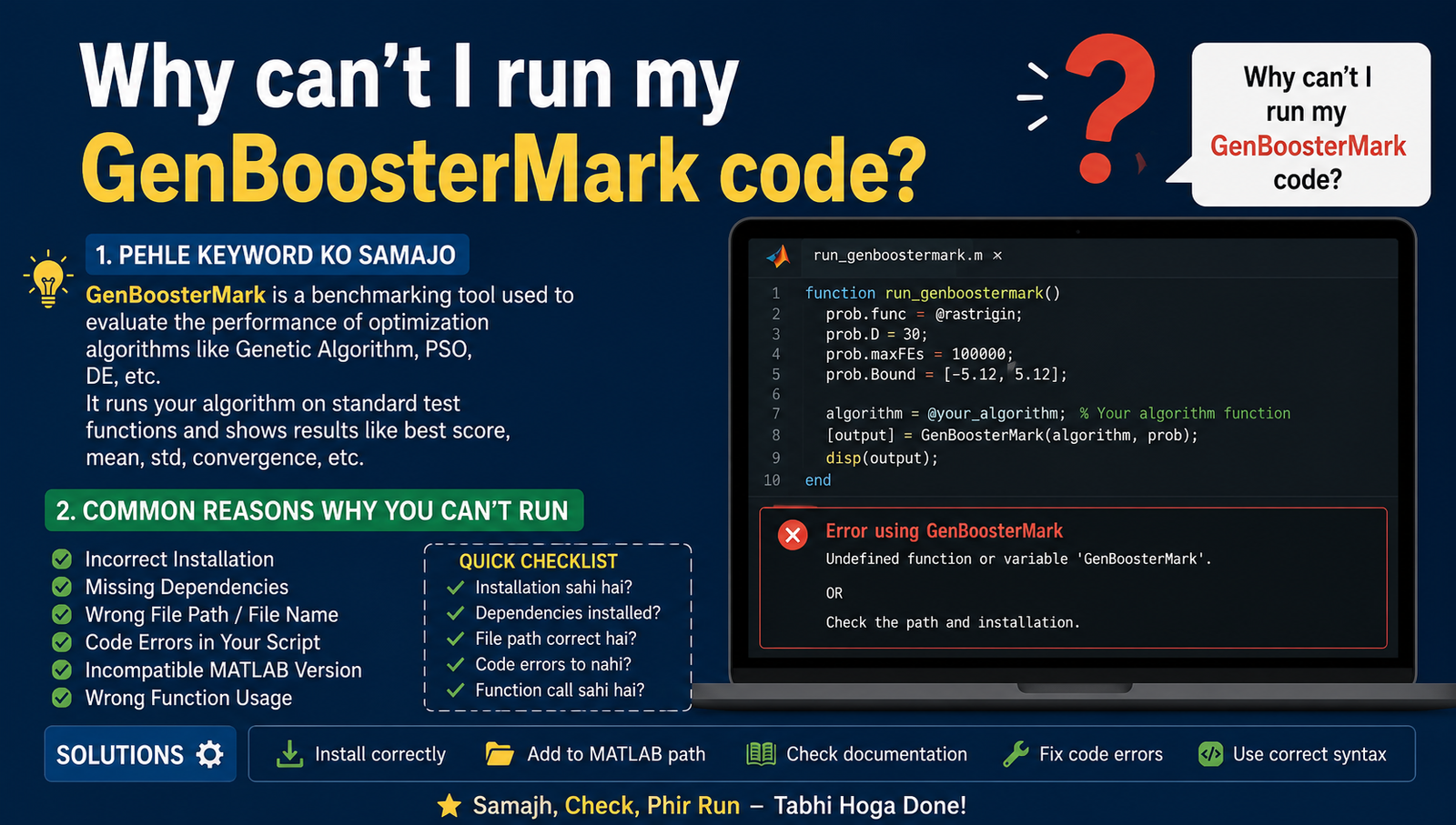
Understanding Why GenBoosterMark Code Fails to Run
If you are asking, “Why can’t I run my GenBoosterMark code?” the first thing to understand is that code usually does not fail for one mysterious reason. Most of the time, it fails because something small is missing, outdated, misconfigured, or written in a way the system cannot understand. That may sound frustrating, but it is actually good news because most code-running problems can be fixed step by step.
GenBoosterMark code may depend on a certain runtime environment, required packages, correct file paths, permissions, configuration files, API keys, or system resources. When even one of these parts is not ready, the code may refuse to start, crash halfway, or show an error that looks more complicated than the real issue. Many beginners think the whole project is broken, but often the problem is just one missing dependency or one wrong command.
The smartest way to solve the issue is not to guess randomly. Instead, you should identify where the failure is happening. Is the code not starting at all? Is the command not recognized? Is the program opening but crashing? Is there an error about a missing module, invalid syntax, permission denied, or configuration not found? Once you know the exact type of failure, fixing your GenBoosterMark code becomes much easier and faster.
Check Whether GenBoosterMark Is Installed Correctly
One of the most common reasons you cannot run your GenBoosterMark code is an incomplete or incorrect installation. If the software, package, Why Can’t I Run My GenBoosterMark Code or framework was not installed properly, your system may not know what GenBoosterMark is. In that case, even a simple command can fail because the operating system cannot find the program or required files.
This problem often happens when users download files manually, skip installation steps, move folders after installation, or install the package in the wrong environment. For example, you may have installed GenBoosterMark in one Python environment but are trying to run the code from another. The same can happen with Node.js, virtual environments, containers, or IDE-based setups.
To fix this, start by confirming that GenBoosterMark is actually installed in the environment you are using. Run a basic version-check command if one is available, Why Can’t I Run My GenBoosterMark Code inspect the installation folder, and make sure your terminal or editor is pointing to the correct runtime. If the command is not recognized, reinstalling the package cleanly is often better than trying to patch a broken setup.
Look for Missing Dependencies and Libraries

Another major reason GenBoosterMark code may not run is missing dependencies. Why Can’t I Run My GenBoosterMark Code A dependency is simply another package, library, or module your code needs in order to work. Your main GenBoosterMark file may look complete, but behind the scenes it may rely on several other tools to process data, connect to services, read files, generate output, or run automation tasks.
Missing dependency errors usually appear as messages like “module not found,” “cannot import,” “package not installed,” or “dependency missing.” These errors are very common, especially when code is copied from another computer, downloaded from a repository, or shared by a team member. The code may work perfectly on one machine but fail on yours because your environment does not have the same packages installed.
The best fix is to locate the project’s dependency file, such as a requirements file, package file, lock file, or setup file. Install everything listed there, then run the code again. If you are using a virtual environment, activate it before installing packages. This matters because installing dependencies globally while running the code inside a separate environment will not solve the problem.
Make Sure You Are Using the Right Version
Version mismatch is another quiet but powerful reason your GenBoosterMark code may fail. Your code may have been written for a specific version of GenBoosterMark, Python, Node.js, or another runtime. If your computer uses a newer or older version, some commands, functions, or syntax rules may no longer behave the same way.
This is especially common when code was created months ago and the tools have changed since then. A function that existed in an older version may be removed in a newer one. A new version may also require different configuration settings. On the other hand, if you are using an outdated version, your code may include features your system does not yet support.
To fix this, compare the version required by your project with the version installed on your machine. If the project has documentation, a readme file, or a configuration file, check it carefully. In professional development, version control is not optional; it is one of the main ways to keep code stable. Installing the correct version can solve errors that look impossible at first.
Review Syntax Errors in Your Code
Sometimes the issue is not the installation, dependency, or environment. The problem may be inside the code itself. Syntax errors happen when the code is written in a way the interpreter or compiler cannot read. This can include missing brackets, incorrect indentation, wrong quotation marks, misplaced commas, misspelled keywords, or incomplete statements.
Syntax errors are usually easier to fix than runtime errors because the system often tells you the exact line where the problem was detected. However, the reported line is not always the real source of the mistake. For example, a missing bracket on line 20 might create an error on line 25 because the system only realizes the structure is broken later.
When checking syntax, do not only stare at the error line. Look a few lines above it as well. Use a code editor with syntax highlighting, formatting, and linting features. Why Can’t I Run My GenBoosterMark Code These tools can highlight mistakes before you even run the code. If your GenBoosterMark code includes copied snippets, check that the formatting did not change during copying, especially indentation and quotation marks.
Check File Paths, Folders, and Project Structure
Incorrect file paths are another common reason GenBoosterMark code refuses to run. Your code may be trying to load a file, image, dataset, configuration, template, or script from a location that does not exist on your machine. Even if the file exists, the path may be written incorrectly or may only work on someone else’s computer.
This often happens when code uses absolute paths, such as a full desktop location from another user’s system. It can also happen when a folder was renamed, moved, or deleted. In some cases, Windows and Linux-style paths are mixed, causing the program to fail. Small differences like slashes, capital letters, spaces, or special characters can also break file access.
The best solution is to keep your project structure clean and predictable. Place your code, configuration files, assets, and data inside clearly named folders. Use relative paths where possible so the project can run on different computers. Before running the program, confirm that every file your code needs is actually present in the expected location.
Fix Permission and Access Problems
Permission issues can also stop GenBoosterMark code from running. Your code may need access to certain folders, system services, network ports, databases, or files. Why Can’t I Run My GenBoosterMark Code If your operating system blocks that access, the program may fail with messages like “permission denied,” “access forbidden,” or “operation not permitted.”
This problem is common when code tries to write files into protected folders, install packages in system directories, access restricted data, or run scripts blocked by security settings. On company computers, security policies may be even stricter. Antivirus software, firewall rules, or admin restrictions can prevent scripts from executing properly.
To fix permission problems, try running the command in a folder where you have full access, such as your user project directory. Avoid storing active code inside protected system folders. If administrative permission is truly required, use it carefully and only when you understand why it is needed. Giving every script full access is not a good habit because it can create security risks.
Confirm Environment Variables and Configuration Settings
Many code projects depend on environment variables and configuration files. These may include API keys, database URLs, secret tokens, project modes, port numbers, file locations, or service credentials. If your GenBoosterMark code expects these values and cannot find them, it may stop immediately or behave incorrectly.
Configuration errors are sometimes confusing because the code itself may be correct. The problem is that the program is missing the information it needs to run. For example, your code may be trying to connect to a service, but the API key is missing. It may be trying to read a configuration file, but the file name is wrong. It may be running in production mode when it should be in development mode.
To solve this, check whether your project has a sample configuration file or setup instructions. Make sure all required values are filled in correctly. Do not leave placeholder values unchanged. Also, Why Can’t I Run My GenBoosterMark Code be careful with spaces, quotation marks, and hidden characters in configuration files because small formatting mistakes can cause big runtime problems.
Understand Runtime Errors and Logic Problems
Runtime errors happen after the code starts running. This means the syntax may be correct, the installation may be fine, and the dependencies may be available, but something goes wrong during execution. Runtime errors can come from bad input, failed calculations, unavailable services, empty data, invalid responses, or unexpected conditions.
For example, your GenBoosterMark code may expect a file with certain columns, Why Can’t I Run My GenBoosterMark Code but the file you provided has different headings. It may expect a number but receive text. It may try to connect to an online service that is temporarily unavailable. It may assume a folder contains data when the folder is actually empty. These issues are not always obvious until the program reaches that part of the workflow.
The best way to handle runtime errors is to read the full error message, not just the last line. The full traceback usually shows the path the program followed before it crashed. Add simple print statements or logs to see what values the code is using. Once you know what the program received versus what it expected, the fix becomes much clearer.
Check Your Command and Execution Method
Sometimes the code is fine, but the way you are running it is wrong. Why Can’t I Run My GenBoosterMark Code This is more common than many people realize. You may be running the wrong file, using the wrong command, starting the program from the wrong directory, or launching it with an editor that does not use the correct interpreter.
For example, a project may require you to run a main file, but you are trying to run a helper module directly. Some scripts must be executed from the root project folder because they depend on relative paths. Others require specific flags, arguments, or environment settings. If these details are missing, the code may fail even though nothing is technically broken.
Before assuming your GenBoosterMark code is damaged, verify the exact run command. Check whether you need to activate an environment first. Confirm that your terminal is inside the correct folder. If the project has multiple files, identify the correct entry point. Running the correct command from the correct location can solve many frustrating execution problems.
Update, Reinstall, or Reset the Project Carefully
If you have tried the basic checks and the code still does not run, the next step is to clean up the environment. Over time, projects can become messy because of failed installations, partial updates, Why Can’t I Run My GenBoosterMark Code duplicate packages, old cache files, or conflicting versions. When that happens, troubleshooting one small error at a time can become difficult.
A clean reinstall can help, but it should be done carefully. First, save your important code, configuration files, and data. Then remove broken dependencies, recreate the virtual environment, reinstall required packages, and run the project again from a clean state. This often removes hidden conflicts that are hard to detect manually.
However, avoid deleting random files without understanding their purpose. Some configuration files may contain important settings. Some folders may store user-generated data. The goal is not to wipe everything blindly but to rebuild the working environment in an organized way. A clean setup often gives you a fresh baseline for proper debugging.
How to Troubleshoot GenBoosterMark Code Like an Expert
Expert troubleshooting is not about guessing faster. It is about narrowing the problem with a clear process. Start with the error message, then identify whether the issue is related to installation, dependency, Why Can’t I Run My GenBoosterMark Code version, syntax, path, permission, configuration, runtime behavior, or execution method. This simple classification saves a lot of time.
Next, change only one thing at a time. Many users make troubleshooting harder by reinstalling packages, editing code, changing paths, updating versions, and modifying settings all at once. If the code suddenly works, they do not know which change fixed it. If it still fails, they may have created even more problems.
Finally, keep notes of what you tried. Write down the command you ran, the error message you received, and the fix you tested. This habit may feel unnecessary for small issues, but it becomes extremely useful when working on larger projects. It also helps if you need to ask another developer, support team, or community member for help.
Preventing the Same Problem in the Future
Once your GenBoosterMark code is running, do not stop there. Why Can’t I Run My GenBoosterMark Code Take a few minutes to prevent the same issue from happening again. Document the correct installation steps, required versions, dependencies, run commands, and configuration settings. A simple setup guide can save hours later.
You should also keep your project organized. Avoid placing files randomly on the desktop or mixing old and new versions in the same folder. Use clear names for folders and scripts. Keep backup copies of important configuration files, but do not expose secret keys or private credentials. Good structure makes code easier to run, debug, share, and maintain.
Most importantly, treat errors as information, not failure. Every error message is a clue. When your GenBoosterMark code does not run, the system is usually telling you what it cannot find, understand, access, or execute. Once you learn how to read those clues, debugging becomes less stressful and much more predictable.
Final Thoughts
So, why can’t you run your GenBoosterMark code? The answer is usually one of these common issues: incorrect installation, missing dependencies, version mismatch, syntax mistakes, wrong file paths, permission restrictions, missing configuration, runtime errors, or an incorrect run command. Why Can’t I Run My GenBoosterMark Code These problems may look technical at first, but most of them are completely fixable with a calm and organized approach.
The best thing you can do is start with the exact error message. Do not ignore it, and do not only read the final line. Look at the full message, identify the category of the problem, and test one fix at a time. This approach is much better than randomly reinstalling everything or rewriting code that may already be correct.
In the end, running GenBoosterMark code successfully Why Can’t I Run My GenBoosterMark Code depends on having the right setup, the right files, the right versions, and the right execution method. Once those pieces are aligned, your code has a much better chance of running smoothly. And if it breaks again later, you will know exactly how to troubleshoot it like someone who understands the process, not someone who is just guessing.